23 Aug 2026
Late-Night Poker Tournaments Drive Heightened Competition in Live Streams

Data from multiple platforms indicates that nighttime tournaments have become central to live poker streaming schedules, drawing larger participant pools and extended viewer engagement across global time zones. Observers note that these events often begin after 8 PM local time in major markets, aligning with peak audience availability in both European and North American regions, while operators adjust formats to accommodate varying player sleep cycles and work schedules. In August 2026 several major streaming services reported consistent spikes in concurrent viewers during these hours, with tournament buy-ins showing measurable increases compared to daytime equivalents.
Platform Adjustments and Schedule Shifts
Streaming services have restructured their calendars around evening slots because participant registration data reveals higher turnout once traditional business hours conclude. Organizers incorporate features such as extended blind levels and added satellite qualifiers that run into the early morning, creating layered competition where players must maintain focus over longer durations. Those who have tracked these patterns point out that the combination of reduced daylight distractions and concentrated prize pools encourages more aggressive betting sequences, which in turn sustains chat activity and donation metrics during broadcasts.
Regulatory filings from the Nevada Gaming Control Board illustrate how licensed online poker rooms have expanded nighttime offerings while maintaining compliance with jurisdictional requirements for fair play and responsible gaming disclosures. Similar trends appear in reports issued by the Australian Gambling Research Centre, where analysts documented parallel growth in late-evening table traffic on platforms serving the Asia-Pacific region. These parallel developments suggest that nighttime tournaments serve as a consistent driver for both player retention and cross-border audience reach.
Strategic Adaptations Among Participants
Players participating in these events frequently adjust their ranges and timing tells to exploit the extended session lengths that characterize nighttime play. Hand histories shared through public databases show elevated frequencies of three-bet and four-bet pots after midnight, a pattern that aligns with fatigue accumulation among some competitors while others maintain tighter discipline. Observers tracking leaderboard movements note that consistent performers often prepare through targeted rest schedules and mental conditioning routines designed specifically for late-hour competition.
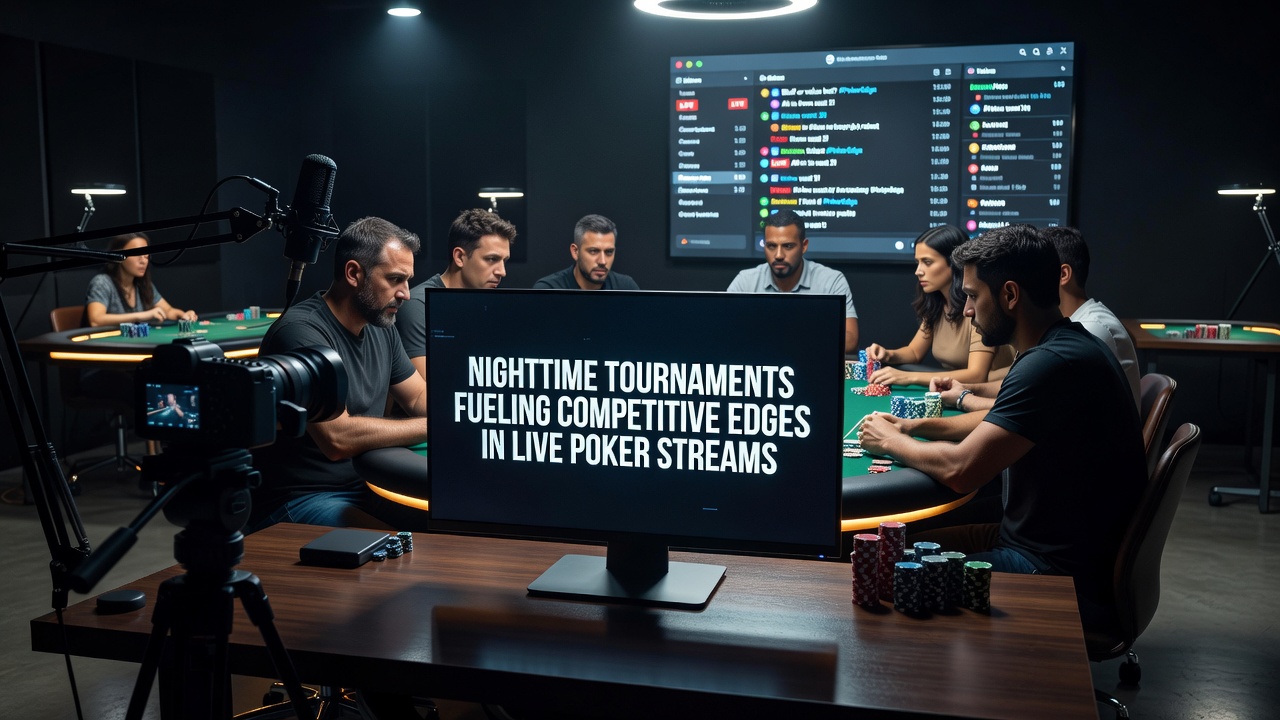
Coaching services have responded by offering specialized modules focused on circadian rhythm management and decision-making under reduced lighting conditions typical of home streaming setups. Tournament directors meanwhile introduce staggered start times and satellite feeders that feed into flagship nighttime events, thereby widening the talent pool and increasing variance in final table compositions. These structural changes create repeated opportunities for emerging players to test strategies against established regulars in high-visibility environments.
Viewer Metrics and Platform Economics
Analytics dashboards published by streaming providers reveal that nighttime tournaments generate extended watch times and higher average revenue per user through integrated tipping systems and subscription renewals. The presence of recognizable commentators and guest analysts during peak evening windows further amplifies retention, while real-time hand breakdowns delivered via on-screen graphics keep casual viewers engaged even when they lack deep strategic knowledge. Industry reports compiled by the American Gaming Association highlight how such content also supports ancillary betting markets where permitted, adding another revenue layer tied directly to tournament progression.
Cross-promotional partnerships between poker operators and broader esports networks have expanded reach, allowing nighttime events to appear in recommendation algorithms alongside other competitive gaming titles. This integration has produced measurable lift in first-time registrants who discover poker through adjacent viewing habits rather than traditional search methods. Data sets released in 2026 confirm that these crossover audiences contribute disproportionately to late-night chat volume and social media amplification.
Conclusion
Nighttime tournaments continue to reshape live poker streaming by concentrating player attention and viewer resources into defined evening windows. Evidence from regulatory bodies and research institutions across multiple continents demonstrates sustained growth in both participation and engagement metrics. As platforms refine scheduling and participants refine preparation techniques, these events maintain their position as key drivers within the broader ecosystem of competitive poker broadcasting.